Next-generation sequencing (NGS) has reshaped modern molecular biology, enabling laboratories to explore genomes, microbial communities, and genetic variation at unprecedented scale and resolution. At the heart of every successful sequencing experiment lies one critical step: DNA library preparation. Regardless of how powerful the sequencer or sophisticated the bioinformatics pipeline, sequencing data quality ultimately depends on how DNA fragments are prepared, tagged, and amplified before loading onto a flow cell.
In recent years, DNA library preparation single enzyme workflows have emerged as a practical evolution of traditional multi-step protocols. By combining DNA fragmentation and adapter tagging into a single enzymatic reaction, these workflows simplify laboratory operations while maintaining the consistency and reproducibility demanded by modern genomics research.
This in-depth article explores the scientific foundation, laboratory applications, workflow optimization, quality control strategies, and practical advantages of single-enzyme DNA library preparation, providing a robust educational resource suitable for a high-quality biotechnology blog.

Understanding DNA library preparation in NGS workflows
DNA library preparation is the process of converting native DNA molecules into sequencing-ready fragments. These fragments must contain platform-specific adapters and often sample-specific index sequences, enabling both sequencing and multiplexing.
According to the National Center for Biotechnology Information (NCBI), library preparation metadata—including library strategy, source, selection, and construction method—is a required component of public sequence data submissions (NCBI SRA metadata guidelines, SRA submission overview). This highlights the central role library preparation plays not only in data generation but also in reproducibility and transparency.
Traditional DNA library preparation protocols typically include:
-
Physical or enzymatic DNA fragmentation
-
End repair and 5′ phosphorylation
-
3′ A-tailing
-
Adapter ligation
-
Cleanup and size selection
-
Indexing PCR amplification
Each step introduces handling time, potential sample loss, and variability—particularly problematic for low-input samples or high-throughput studies.
What defines single-enzyme DNA library preparation?
Single-enzyme DNA library preparation refers to workflows in which a single enzymatic system performs both DNA fragmentation and adapter tagging simultaneously. This strategy is most commonly associated with transposase-mediated tagmentation, a mechanism derived from bacterial transposable elements.
Tagmentation has been extensively characterized in peer-reviewed literature as an efficient method for generating sequencing libraries with reduced hands-on time (Head et al., 2014, Picelli et al., 2014). The transposase introduces double-stranded breaks while inserting adapter sequences at the cleavage sites, producing fragments that are immediately compatible with downstream amplification.
This consolidation of steps dramatically simplifies the workflow and reduces opportunities for technical error.
Scientific advantages of single-enzyme library preparation
Reduced workflow complexity
By eliminating multiple enzymatic reactions and cleanups, single-enzyme workflows reduce cumulative error and variability. This is particularly valuable for multi-user laboratories and sequencing core facilities, where protocol consistency is critical.
Improved performance with limited DNA input
Sample loss during cleanup steps is a well-recognized issue in conventional protocols. Reducing the number of bead-based purifications helps preserve library complexity, especially when working with limited or precious samples, as discussed in NIH-supported sequencing methodology reviews (NHGRI sequencing technologies overview).
Automation and scalability
Single-enzyme library prep is well suited for liquid-handling automation, enabling reproducible processing of dozens to hundreds of samples in parallel. Many academic sequencing cores explicitly recommend simplified workflows for high-throughput projects (UC Davis DNA Technologies guidance, UF sequencing core library requirements PDF).

Core laboratory applications
Whole-genome sequencing (WGS)
In WGS experiments, even coverage across the genome is essential for accurate variant detection and structural analysis. Single-enzyme library prep workflows can generate consistent insert size distributions suitable for standard short-read platforms.
Benchmarking studies often rely on reference genomes such as NIST Genome in a Bottle (GIAB) materials to evaluate library prep performance (NIST GIAB program, GIAB documentation).
Targeted sequencing and gene panels
While enrichment chemistry defines the target space, the quality of the final sequencing library determines signal-to-noise ratios and coverage balance. Many core facilities emphasize strict library QC thresholds prior to sequencing (UMass Chan index pooling guide PDF, UF index pooling guide PDF).
Microbial genomics and metagenomics
Microbial genomes vary widely in GC content and DNA quality. Single-enzyme library prep provides a consistent baseline workflow for large isolate collections or environmental samples, as described in NIH-archived metagenomics methodologies (NCBI metagenomics overview).
Epigenomics and chromatin accessibility workflows
Although conceptually distinct, chromatin accessibility assays such as ATAC-seq rely on the same tagmentation principles used in single-enzyme DNA library prep. Publicly available academic protocols illustrate how transposase-based tagging supports reproducible library construction (UPenn ATAC-seq protocol PDF).
Quality control considerations for single-enzyme libraries
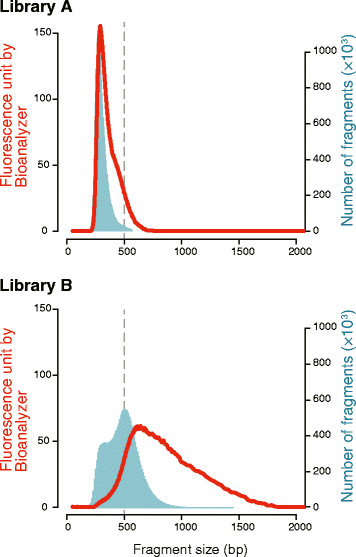
Insert size distribution
Insert size directly impacts sequencing efficiency and alignment performance. Bead-based size selection is commonly used to remove short fragments and adapter dimers (UC Davis bead size selection FAQ).
Library complexity and duplication rates
Duplicate reads can arise from limited input DNA or excessive PCR amplification. Many academic genomics cores recommend reviewing duplication metrics during initial FastQC analysis (MSU FastQC tutorial).
Adapter contamination
Adapter dimers reduce usable reads. Sequencing facilities routinely reject libraries with excessive adapter peaks, underscoring the importance of proper cleanup and QC (UF customer-constructed library requirements PDF).
Documentation and data submission best practices
Public repositories require clear documentation of library construction methods. NCBI guidelines recommend specifying:
-
Library construction strategy
-
Enzymatic approach used
-
Indexing method
-
Insert size range
These requirements support reproducibility and long-term data reuse (NCBI SRA submission help, GEO sequencing data guidance).
DNA library preparation single enzyme, NGS library prep workflow, tagmentation library preparation, transposase-based library prep, Illumina-compatible DNA library, dual-index DNA library, high-throughput sequencing library prep, automated NGS library construction, genomic DNA library preparation, sequencing library QC.
Introducing: DNA Library Preparation Single Enzyme
For laboratories seeking a simplified, reproducible, and scalable approach to NGS library construction, DNA Library Preparation Single Enzyme provides a practical solution aligned with modern sequencing demands.
This workflow is designed for research laboratories and sequencing facilities that prioritize:
-
Reduced hands-on time
-
Workflow consistency across batches
-
Compatibility with high-throughput processing
-
Clear documentation for downstream analysis and data submission
By consolidating key enzymatic steps, it supports efficient library construction without unnecessary procedural complexity—making it well suited for routine genomic, microbial, and targeted sequencing applications.
Conclusion
Single-enzyme DNA library preparation represents a logical evolution in NGS workflow design. By simplifying library construction while preserving data quality, this approach aligns with the growing demand for scalability, reproducibility, and operational efficiency in genomics laboratories.
As sequencing continues to expand across research disciplines, streamlined library preparation methods—grounded in well-established enzymology and supported by academic best practices—will remain central to reliable, high-quality sequencing outcomes.